





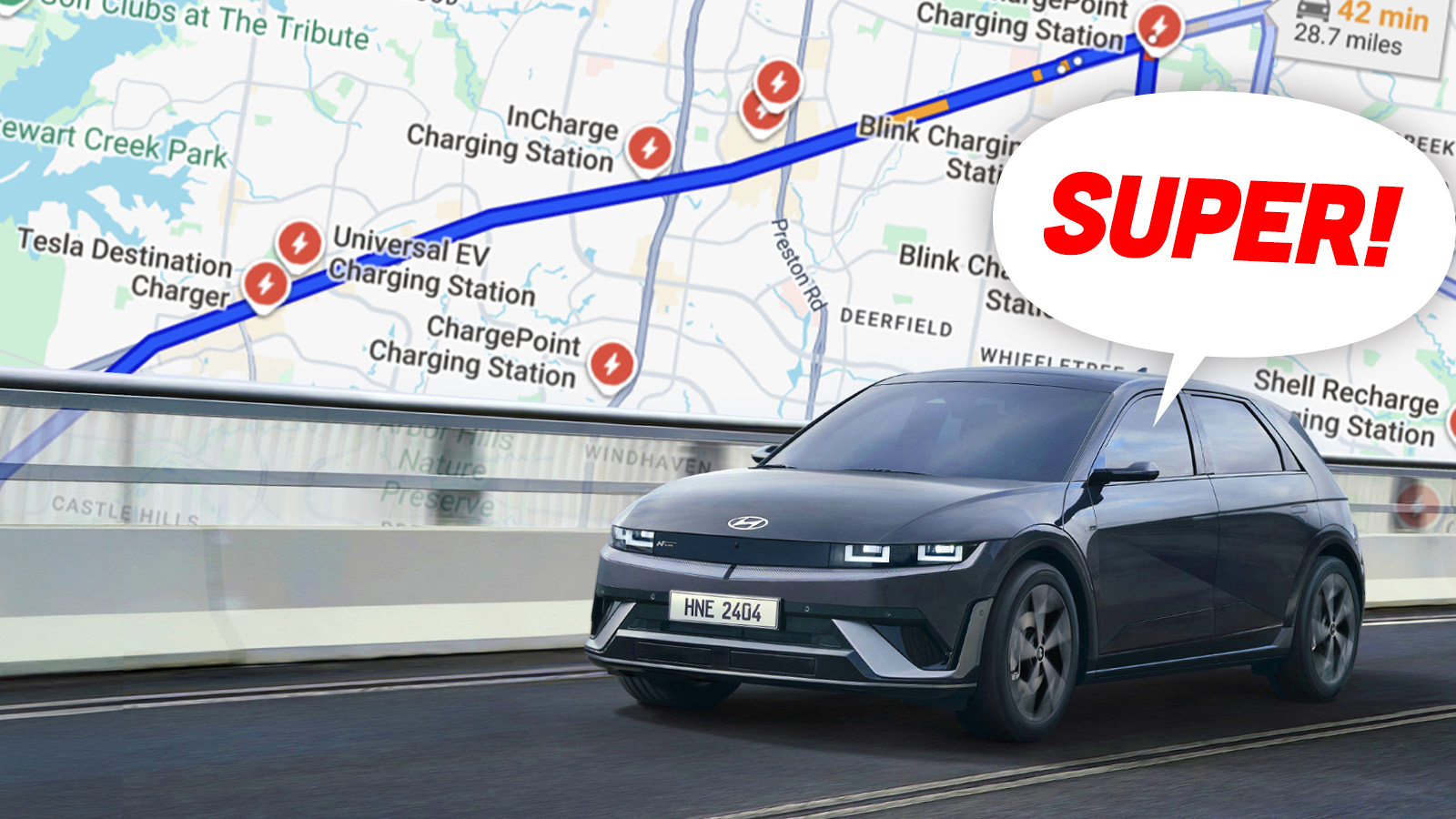
I’ve never owned an electric vehicle, but as an auto journalist, I’ve had the pleasure of driving dozens throughout my career. Having an EV press car is fun, but when I’m behind the wheel, there’s always a nagging thought in my head about charging it.
I’m not talking about range anxiety—I think most parts of America actually have a pretty robust charging network by now, so fears of getting stranded between stations have long since subsided within me. I’m just worried about the inconvenience of it all.


As a New York City resident who lives in an apartment with no dedicated parking, I don’t have a garage or an outlet to plug in EV press cars overnight. So I have to use public charging. Planning my drives around making sure the car is charged is easy. It’s whether the actual chargers are occupied or not where I run into problems.
In a gas car, I can reasonably expect exactly how long it’ll take to fill up my tank. But with an EV, there’s a chance all of the banks at my desired charging station will be full. Even worse, some stations are busy enough that lines form, forcing people to wait until others charge first. That’s not very fun, and deeply inconvenient.
So What’s The Fix?
The obvious solution is to design a system that can enlighten EV drivers as to how many open banks are available for charging at a station at any given time using live data from the chargers themselves. This way, drivers can make a calculated decision on whether to head to that charger for a juice-up or go somewhere else.

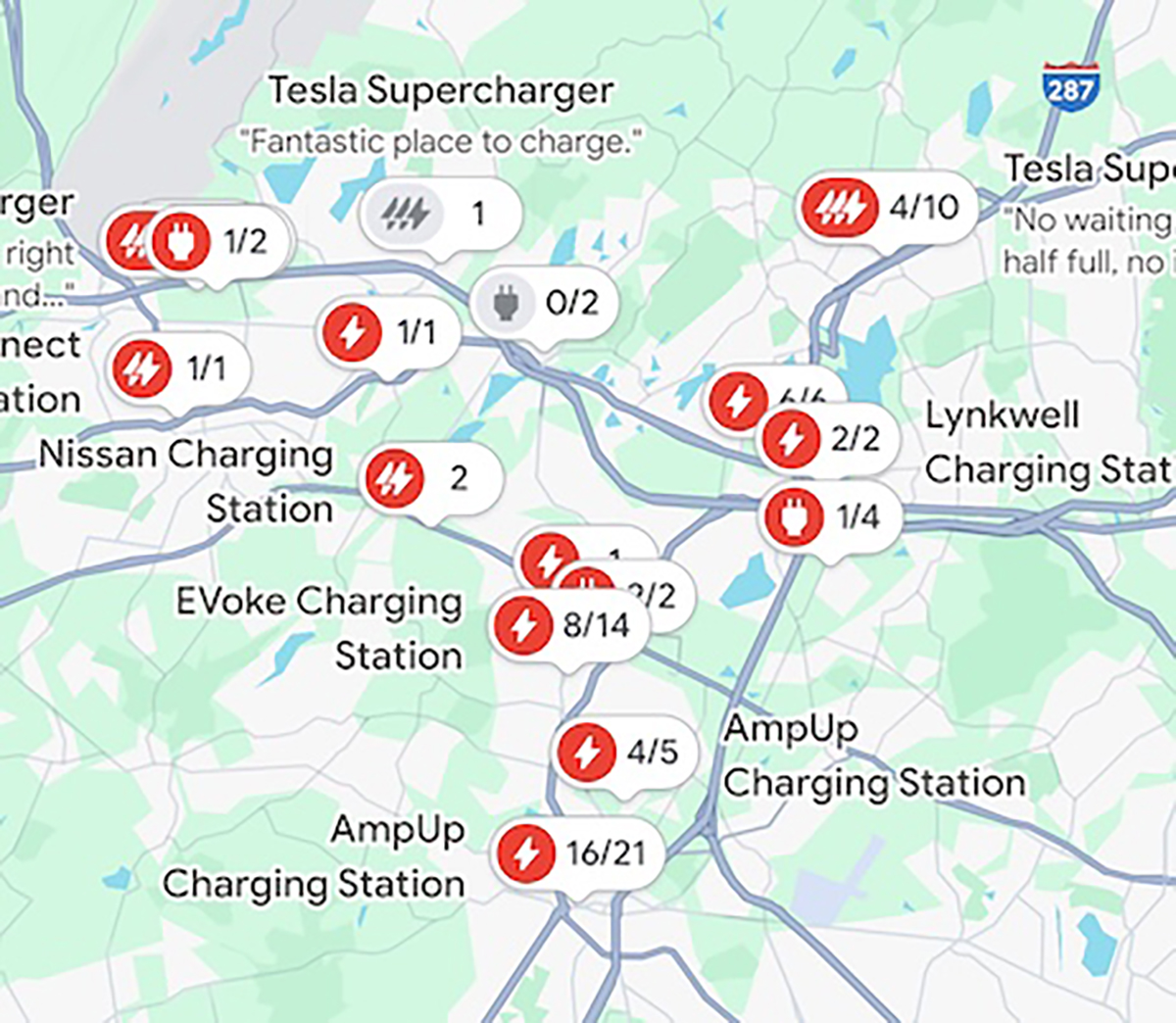
This already exists for most EV charging companies, of course. Brands like EVgo, ChargePoint, and Electrify America all have apps that’ll tell you which banks are open and which are occupied. More importantly, the information for these chargers is also available on Google Maps, meaning you can compare a bunch of different stations and their availability without having to make five new accounts or switch between five different apps.
Tesla’s Supercharger network, the largest network of EV chargers in the country, has had this availability feature for years, too—but only if you were in a Tesla or used the Tesla app. This meant you’d have to bounce between the Tesla app and Google Maps to get a true sense of what’s available. Not the end of the world, but pretty annoying in practice.

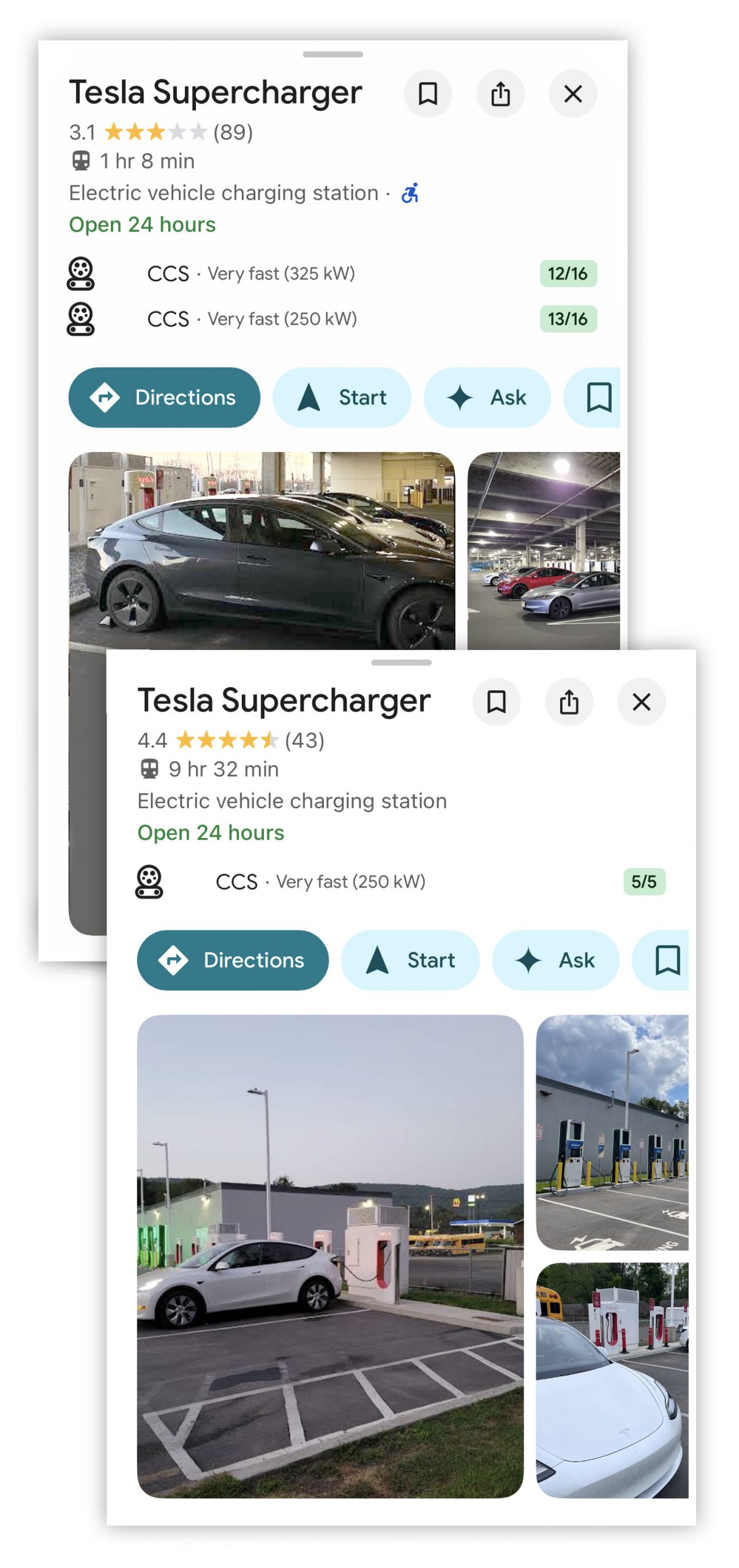
Now, that issue has finally been rectified. As of today, charging bank availability for Tesla Superchargers has finally been integrated into Google Maps. That means you can check Supercharger banks alongside other brands without having to leave the app. Like other charging stations, Google displays how many banks are available out of the total banks at any given location, and info on the charger type (in this case, NACS) and charging speeds.
Why Is This Such A Big Deal?
Five years ago, this feature would’ve been a lot less interesting. But recently, Tesla has unlocked Supercharger availability to nearly two dozen brands, meaning there’s a far bigger population of vehicles that might be looking for a juice-up.

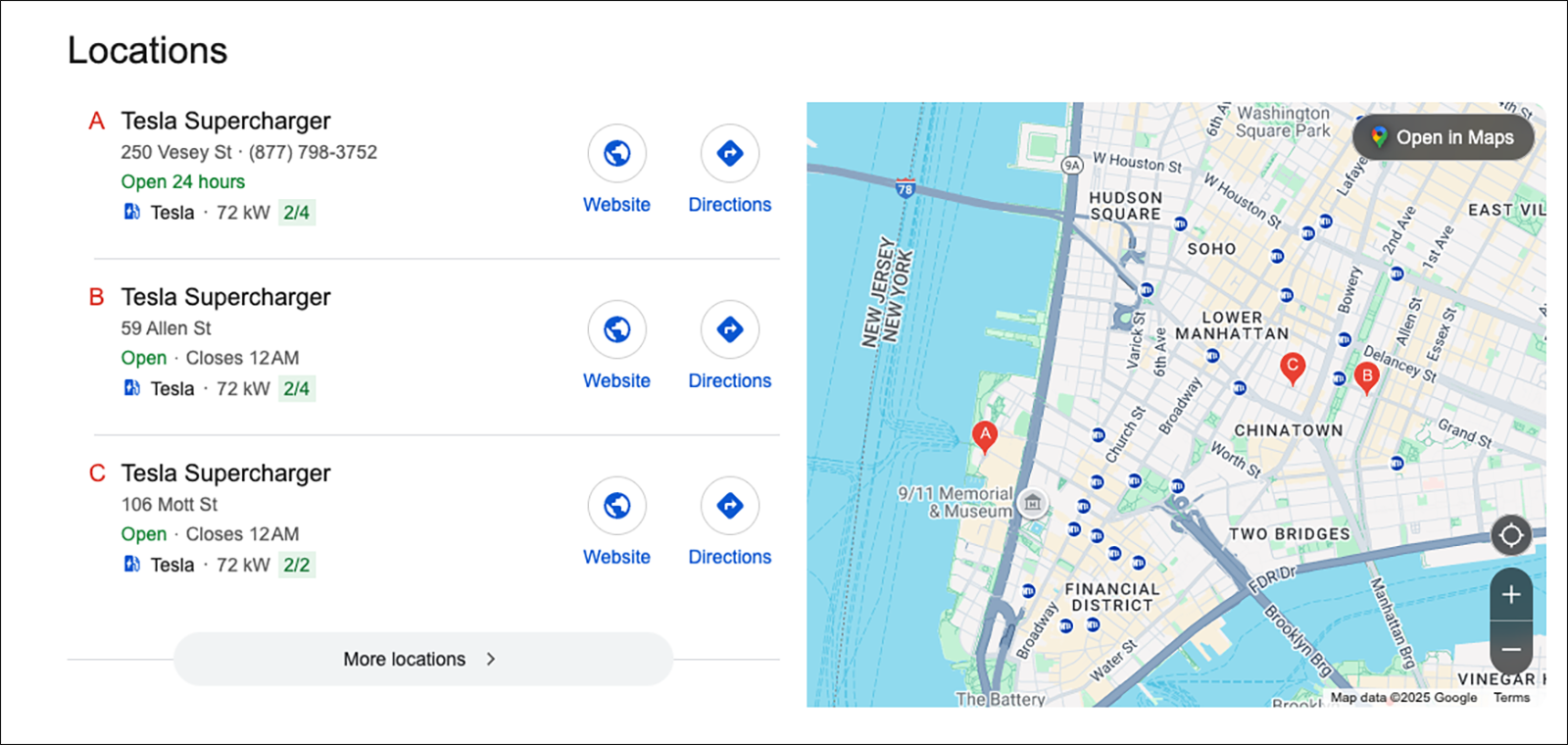
Like I mentioned earlier, this is more about convenience than anything else. Tesla owners have had seamless access to this information for years. Now, people without Teslas don’t have to use the Tesla app to find an empty charging bank—they can do it all in one app that’ll also navigate you to whichever charger you choose.
Stuff like this might not sound like a big deal, but in the grand scheme of getting more people into EVs, it’s a significant step. One of the main barriers to EV adoption is the perceived lack of convenience. Showing people on the fence just how simple it is to find an open charger might make them more likely to buy an EV than another gas-powered car.
Live availability of Superchargers now in Google Maps pic.twitter.com/DJvS83wVxm
— Tesla Charging (@TeslaCharging) November 11, 2025
Theoretically, it’ll also help curb fights over charging stations between EV owners whose cars are low on electrons. I’ve seen my fair share of screaming matches to know this happens more often than you think.
Top graphic image: Google Maps; Hyundai