











The screams over range anxiety might be not just overblown, but the wrong thing to complain about. This realization came to me ironically while driving a gas-powered Lexus.
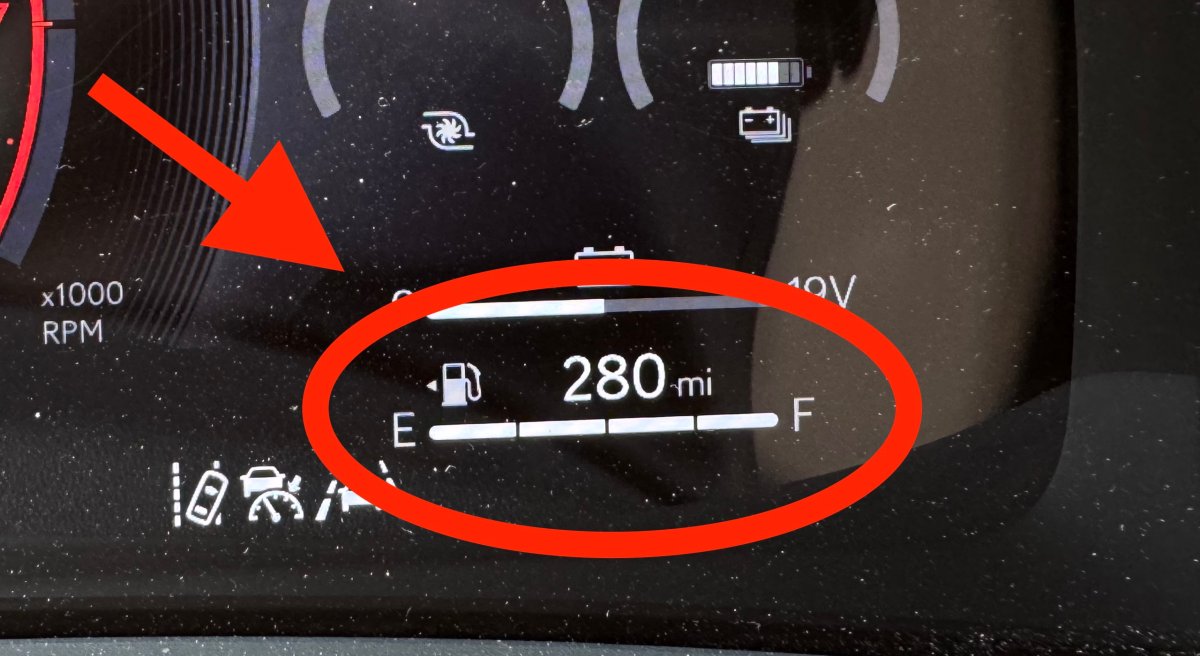
While spending the week with the hybrid 2025 Lexus LX 700h I took three road trips. It was during the first road trip I realized that the maximum driving range of this hybrid off-road SUV might only be 280 miles, though it might be more. I’ll explain, but I instantly realized that on paper the Rivian R1S has more driving range than the hybrid Lexus LX before needing to refuel, and in the real world it might too. Or at least it’ll match the Lexus.
The EPA fuel economy ratings for the 2025 Lexus LX 700h check in at 19 mpg city, 22 highway, and 20 combined. As an aside for those keeping score at home, that’s barely better than the non-hybrid LX 600’s ratings of 17/22/19.
Worse, the hybrid’s battery pack actually eats into space so much so that the engineers gave the hybrid model a smaller fuel tank than the gas-only LX. At 17.97 gallons the LX hybrid’s fuel tank holds 3.17 gallons less fuel than the non-hybrid model. That translates to the EPA rating the LX 700h as having a driving range of 358 miles while the non-hybrid LX 600 has a rating of 401 miles. Those ranges are calculated using the city rating.
The LX hybrid’s highway fuel economy rating would translate to a maximum theoretical driving range of 395 miles. A dual-motor Rivian R1S with the Max Pack has an EPA-rated range of 410 miles.
These are paper ratings, and before anyone screams foul there are a bunch of caveats to explain. Electric cars only carry one EPA-rated range number, and it essentially uses the formula for gas-powered car’s combined rating. Which would mean if apples to apples the LX hybrid’s combined rating would only give it 359 miles of range.
The Rivian R1S Dual-Motor Max Pack has usable battery capacity of 140-kWh. That combined range rating would equate to a theoretical average of 2.92 mi/kWh. I’m sure that’s possible, though not entirely sure it would be with me behind the wheel. If I were to average a much more reasonable, and probably a bit on the low end, 2.0 mi/kWh, that would net a driving range of just 280 miles in the real world with the R1S. The reality lives in the upper to middle of the spectrum with Edmunds’ range test resulting in 386 miles on a charge with a 2025 Rivian R1S Dual-Motor (Performance, which doesn’t affect the efficiency) Max Pack.

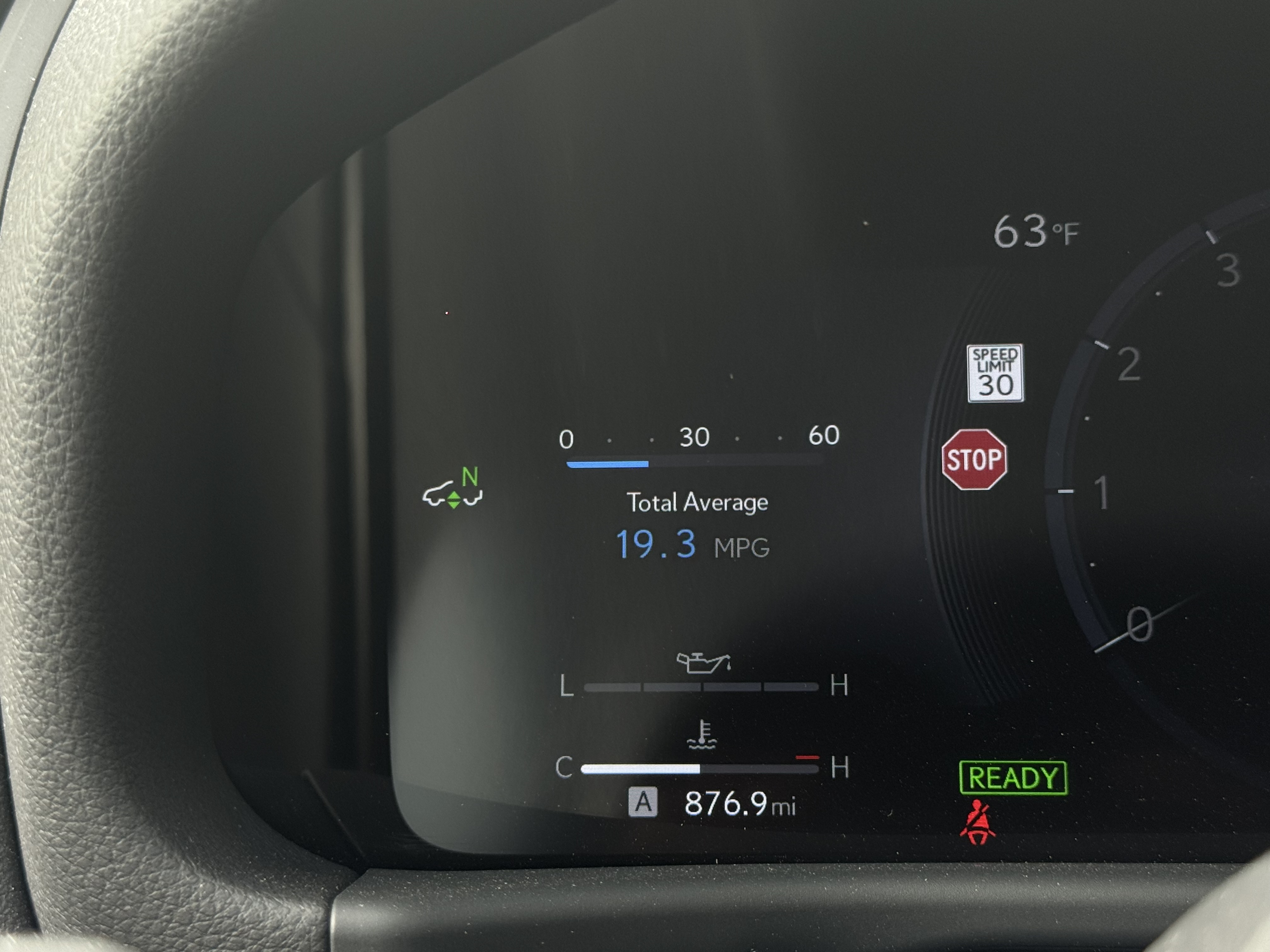
The plot gets weird with my experience with the LX 700h. Over the course of three road trips totaling 876 miles the LX’s onboard trip computer said the twin-turbo V6 hybrid powertrain avenged 19.3 mpg. That would theoretically on paper give the LX a driving range of 346 miles if I drained the tank bone dry.
But the LX didn’t believe that to be true. One time the system told me with a full tank the LX only had 264 miles of range. The onboard trip computer never registered more than 280 miles of driving range after filling the tank up.
Interestingly both these SUVs are designed, engineered, and absolutely capable of heroic off-road feats that would take the driver far from civilization.
The LX 700h is the real Land Cruiser for the U.S. at this point. Land Cruisers have always gotten terrible fuel economy, and frankly the 700h doesn’t improve in terms of meaningful efficiency compared to the non-hybrid model.
The reality that struck me randomly while driving the Lexus LX 700h is that EVs no longer have a range problem. We’ve reached the point of simply whether it’s convenient and or easy to refuel. The good news there is charging your EV sucks a little less in 2025.


