



Why It Matters
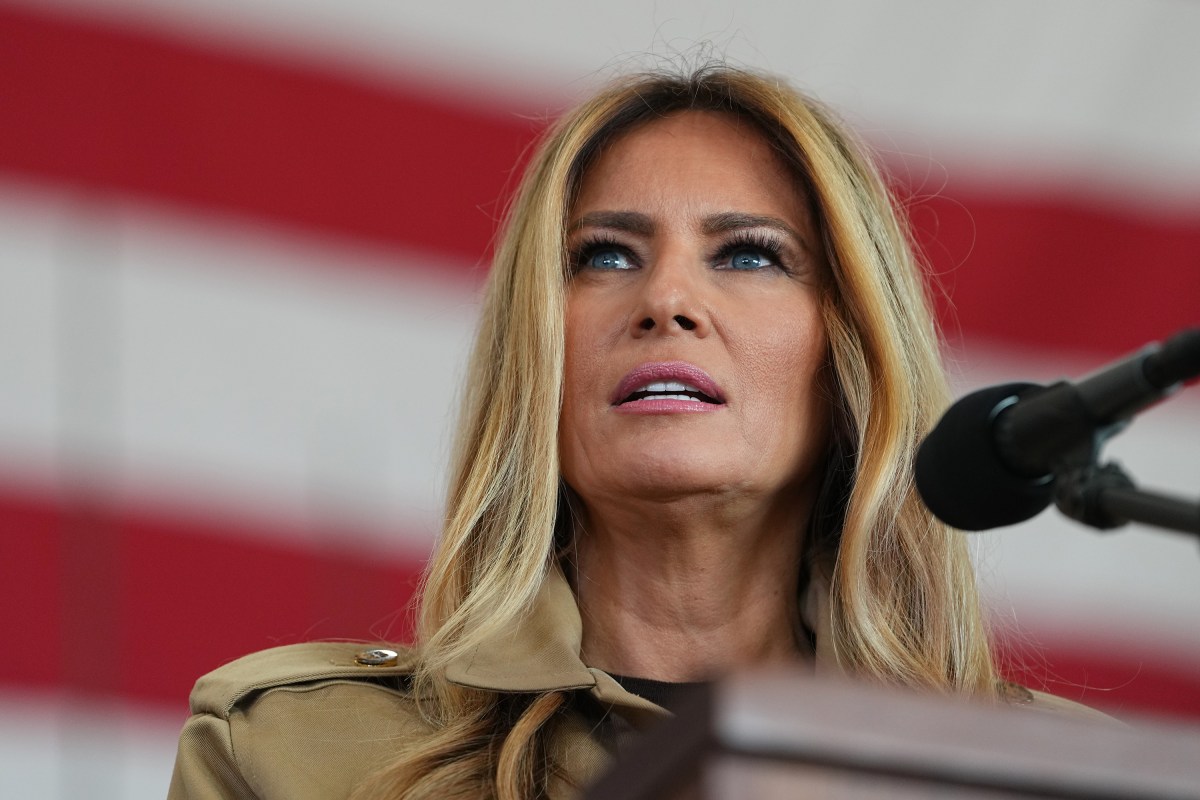
Senator Bernie Moreno’s proposal to eliminate dual citizenship carries implications far beyond legislative debate: it could directly affect First Lady Melania Trump and her son Barron, who both hold U.S.–Slovenian citizenship.
While the bill aims to require all dual nationals to renounce their foreign citizenship or risk losing their American status, it also raises constitutional questions, potential political tensions for the Trump administration, and practical challenges for millions of Americans who maintain ties to other countries.
The measure represents one of the most sweeping attempts in decades to redefine the legal meaning of U.S. citizenship and national allegiance.
What To Know
What the Bill Would Do
The legislation, titled the Exclusive Citizenship Act of 2025, states that “citizens of the United States shall owe sole and exclusive allegiance to the United States.”
The text of the bill says that “an individual may not be a citizen or national of the United States while simultaneously possessing any foreign citizenship.”
Under the proposal, U.S. citizens who also hold foreign citizenship would be required to renounce their non-U.S. citizenship within one year of enactment or alternatively renounce their American citizenship.
Those who do not comply would “be deemed to have voluntarily relinquished United States citizenship.”
Moreno, who immigrated from Colombia and became a U.S. citizen at 18, said in a statement that “being an American citizen is an honor and a privilege—and if you want to be an American, it’s all or nothing.”
He added: “It was an honor to pledge an Oath of Allegiance to the United States of America and ONLY to the United States of America. It’s time to end dual citizenship for good.”
If enacted, the legislation would represent a substantial change to current U.S. policy. Dual citizenship is permitted under existing law, and the federal government does not maintain a registry of dual nationals.
Estimates of how many Americans might be affected vary widely, with expert assessments ranging from several hundred thousand to several million dual citizens.
Impact on the First Family
The bill, if passed, could affect members of the president’s own family.
Melania Trump, who became a naturalized U.S. citizen in 2006, “remains a dual citizen of the U.S. and Slovenia, as does her son Barron,” according to Mary Jordan’s 2020 biography The Art of Her Deal.
Jordan reiterated this in a 2024 interview, noting that both Melania and Barron “continue to have joint citizenship.”
In the interview, Jordan said that maintaining Slovenian citizenship offered practical benefits for Barron, including the ability “to work freely in all of Europe much more easily.”
She added that Melania sought to give her son “more options” and emphasized that he holds a Slovenian passport and speaks Slovenian.


Legal and Constitutional Hurdles
Moreno’s proposal may face constitutional challenges if advanced through Congress. The Fourteenth Amendment provides that U.S. citizens cannot lose their citizenship unless they voluntarily relinquish it.
Courts have also recognized dual nationality as a longstanding legal status established as far back as 1939 in Perkins v. Elg, and affirmed in The Kawakita v. United States (1952).
The landmark Afroyim v. Rusk (1967) held that U.S. citizens cannot be stripped of their citizenship involuntarily, which undercuts the idea that merely holding citizenship elsewhere should nullify U.S. citizenship.
As Newsweek previously reported, experts have noted that any law forcing Americans to renounce foreign citizenship could prompt significant legal scrutiny.
The bill sets out extensive administrative requirements for implementation.
Within 180 days of enactment, the Secretary of State would be required to issue regulations for “declaration, verification, and recordkeeping” related to citizenship status.
The Secretary of Homeland Security would be directed to publish a notice informing the public of the renunciation requirement.
Individuals deemed to have relinquished citizenship under the law would be recorded as non-citizens in federal systems.
The introduction of Moreno’s bill comes as the Trump administration pursues broader immigration and citizenship policy changes, including reductions in refugee admissions and proposed alterations to birthright citizenship.
Those measures have drawn legal challenges and criticism from advocacy groups, though Moreno’s proposal focuses specifically on the legal framework of national allegiance.
Melania Trump is the only first lady in U.S. history to be a naturalized citizen, having moved to the United States in 1996.
Her Slovenian heritage has been documented extensively, including her efforts to ensure that her son maintained ties to her home country through language and citizenship.
Melania Trump’s Immigration Lawyer Speaks Out
Immigration attorney Michael Wildes, who previously represented Melania Trump, told Newsweek the bill was “preposterous.”
Wildes, who is now the mayor of Englewood, New Jersey, said: “A bill without the force of law is simply a piece of paper. The United States is one of many countries that permits its citizens to hold dual nationality, whether acquired by the wonderful choice to naturalize or by virtue of birth.
“Our founding parents and many of our first presidents were dual nationals of both the United States and other countries—including our then‐enemy, Great Britain.
“To claim that our military personnel are not loyal simply because they are not U.S. citizens, or that dual nationals cannot devote their full service to this country, is preposterous.”

What People Are Saying
First lady Melania Trump said: “I believe in the policies that my husband put together. Because I believe that we need to be very vigilant who is coming to the country,” adding, “My personal experience of traversing the challenges of the immigration process opened my eyes to the harsh realities people face, including you, who try to become U.S. citizens.”
What Happens Next
Moreno’s bill now moves to the Senate committee process, where it is unclear whether Republican leaders will advance it, and even if they do, the proposal will almost certainly face constitutional challenges because courts have long held that U.S. citizenship cannot be revoked without a voluntary act.
The measure would also require the State Department and Department of Homeland Security to build an unprecedented system to identify and process all dual citizens, a logistical hurdle that adds further uncertainty to its prospects.
Update 11/02/2025, 15:39 p.m. ET: This article has been updated with comment from Michael Wildes.