:max_bytes(150000):strip_icc():focal(772x336:774x338)/Lisa-Rinna-Harry-Hamlin-Hollywood-Reporter-SAG-AFTRA5th-Emmy-Nominees-Night-120625-bdad456f23ea4ffdaa7faf459bc0dc5f.jpg "Harry Hamlin Tells Wife Lisa Rinna That He Was ‘Forced to Smoke PCP’ in Jail in 1970")




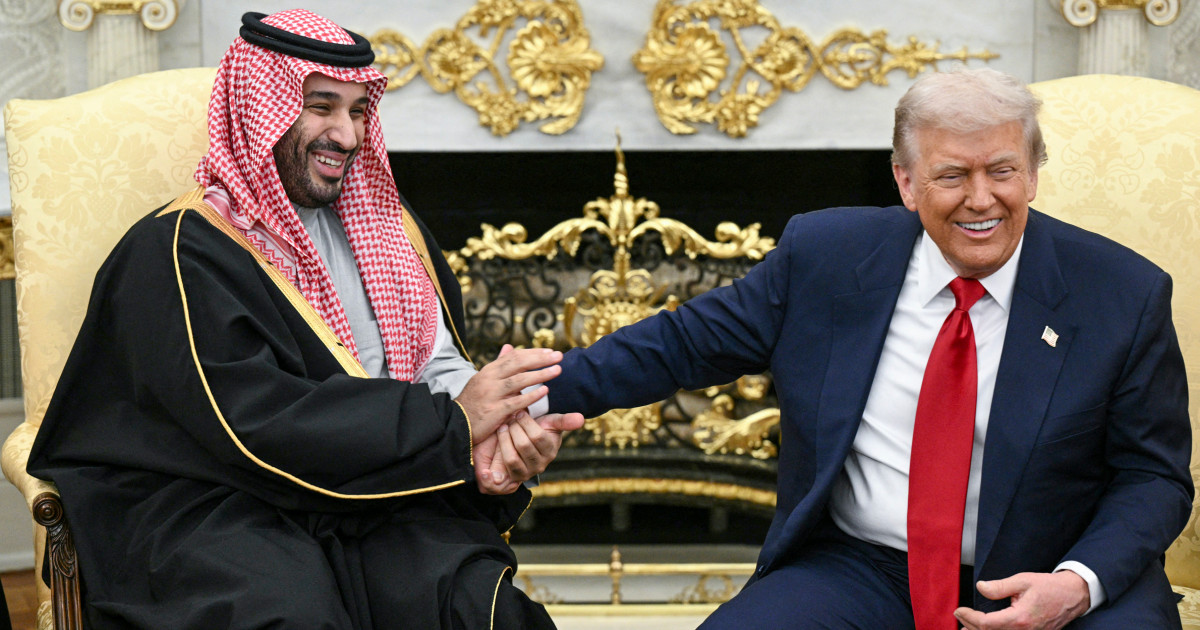
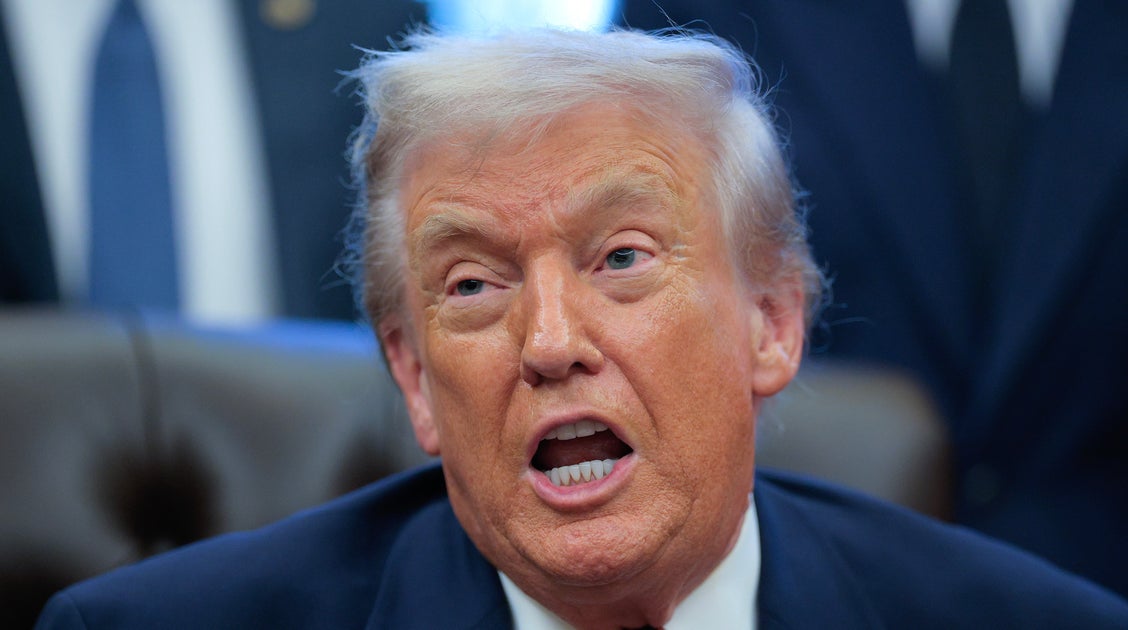
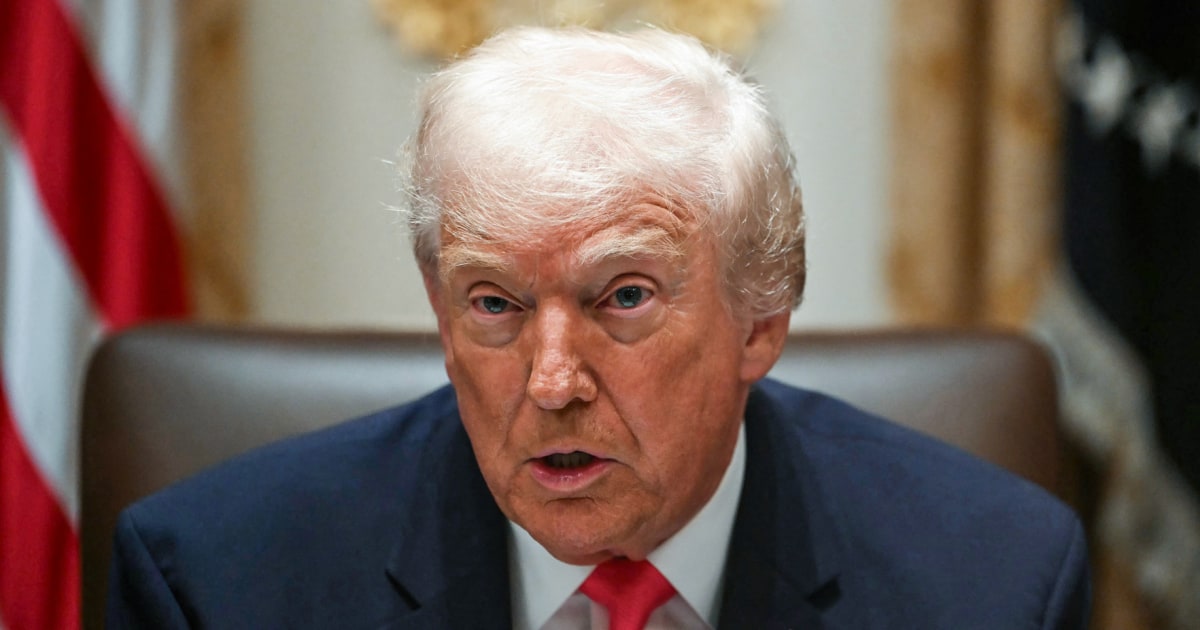
In his first visit to the White House since the murder of journalist Jamal Khashoggi, Mohammed bin Salman received a warm welcome from President Donald Trump, who contradicted U.S. intelligence and said the Saudi crown prince “knew nothing” about the killing.
“You’re mentioning somebody that was extremely controversial,” Trump said Tuesday in response to questions from a journalist about Khashoggi. “A lot of people didn’t like that gentleman that you’re talking about. Whether you like him or didn’t like him, things happen, but [the crown prince] knew nothing about it, and we can leave it at that.”
Trump began his remarks by saying that he was proud of the crown prince in “terms of human rights and everything else.”
Crown Prince Mohammed, 40, became an international pariah after the 2018 murder of Khashoggi, a fierce critic of his government. At the time, Trump defended the Saudi government even after the CIA concluded that the crown prince himself ordered the killing.
Trump lashed out at a reporter from ABC News who asked the crown prince about Khashoggi’s death and about criticism from the families of the victims of the Sept. 11, 2001, terrorist attacks, many of whom have long pushed for answers on the Saudi government’s potential ties to the attackers.
“ABC, fake news, one of the worst, one of the worst in the business,” he said.
The crown prince dismissed the criticisms against the Saudi government as part of a campaign to drive a wedge between Washington and Riyadh.
“I feel painful about, you know, families of 9/11 in America,” he said. “But you know, we have to focus on reality.”
Crown Prince Mohammed also defended the kingdom’s probe into Khashoggi’s murder, which he said included internal reforms. A Saudi court sentenced five people to death for their involvement in the killing.
“It’s been painful for us in Saudi Arabia,” he said, promising that “we are doing our best that this doesn’t happen again.”
Hanan Elatr Khashoggi, the late journalist’s widow, responded to Trump on X, writing, “There is no justification to murder my husband. While Jamal was a good transparent and brave man many people may not have agreed with his opinions and desire for freedom of the press. The Crown Prince said he was sorry so he should meet me, apologize and compensate me for the murder of my husband.”
The crown prince said in 2019 that he took “full responsibility” for the Khashoggi killing since it happened on his watch, but denied ordering it.
Khashoggi’s death has highlighted the risks journalists face around the world, particularly in areas where there is conflict. A report from the Committee to Protect Journalists released in February said that at least 124 journalists and media workers were killed in 2024, mainly Palestinian journalists killed as a result of Israel’s military offensive in Gaza.
The crown prince’s trip on Tuesday will be seen more broadly as a move toward acceptance back into the diplomatic fold.
“He’s a different kind of figure now. Obviously, the questions about the manner of his rule and internal repression, those things haven’t gone away. But he’s a changed figure; it’s a changed moment. And, I think, important symbolically in that sense,” said Michael Wahid Hanna, the U.S. program director at the International Crisis Group, a global nonprofit organization based in Brussels that works to prevent conflicts.
He added: “He’s central to what this administration wants to do in the region.”
Trump’s welcome of the crown prince was an elaborate display of pomp and circumstance. After arriving at the White House, the crown prince was greeted by a military flyover of stealth fighter jets, officers on horseback and a tour of the Rose Garden from Trump. Later, speaking to reporters in the Oval Office, the president praised the reception that he received when he visited the kingdom earlier this year. “I love the country and people,” he said.
Trump and the crown prince joked about investing $1 trillion —a sum roughly equal to Saudi Arabia’s entire wealth fund —into the U.S., up from a $600 billion pledge.
The two leaders are also expected to sign economic and defense agreements, a White House official told NBC News.
Even before the crown prince had set foot in the United States, Trump confirmed at an Oval Office event Monday that he would be willing to sign off on the sale of F-35 stealth fighter jets to the kingdom, a contentious move that could shift the balance of power in the Middle East, where Israel has been the primary recipient of America’s cutting-edge military technology. Trump repeated the pledge Tuesday and promised a deal.
Trump’s announcement of the sale may not actually lead to Saudi Arabia receiving the F-35s anytime soon, analysts say.
“The devil will kind of be in the details there,” said Andrew Leber, a nonresident fellow at the Carnegie Endowment for International Peace who has done extensive research on Saudi Arabia, noting that a similar deal announced with the United Arab Emirates fell through.
He added, “That deal ultimately ran aground on a combination of U.S. concerns with maintaining Israel’s qualitative military edge and concerns about the extent to which U.S. security technology might leak to China.”
Trump on Tuesday designated Saudi Arabia a “Major Non-NATO Ally,” noting that the classification would take the country’s military cooperation with the U.S. “to even greater heights.”
“You always had a little cloud over your head, and sometimes that cloud was very big. That cloud is not there anymore, and we want to keep it that way,” Trump said before announcing the designation at a dinner honoring Crown Prince Mohammed.
The Major Non-NATO Ally status is a designation that “provides foreign partners with certain benefits in the areas of defense trade and security cooperation,” according to the State Department. It does not, however, require U.S. security commitments to the MNNA country.
The possibility of Saudi Arabia normalizing relations with Israel is a key part of the talks. “I already brought it up,” Trump said when asked about the prospect of Saudi Arabia joining the Abraham Accords, the 2020 U.S.-brokered agreement that led a number of regional countries to establish formal diplomatic ties with Israel. “I don’t want to use the word ‘commitment,’ but we had a good talk,” he said.
Analysts have been skeptical about a breakthrough.
“There’s no near-term horizon for normalization at the moment,” Hanna said.
“The risks for Mohammed bin Salman are extremely high if he joins the Abraham Accords,” agreed Fawaz Gerges, professor of international relations at the London School of Economics. He noted that Saudi Arabia had made clear it would need some form of Israeli commitment to a path to a Palestinian state — something Israel has publicly dismissed.
The crown prince’s strategy was generally “to minimize the risks to his rule,” Gerges said.
Even if the crown prince does not announce the establishment of diplomatic ties with Israel, he has won favor with Trump as one of the regional leaders who helped pull together the current ceasefire between Israel and Hamas.
Trump has long touted his deal-making abilities and, according to a senior administration official, a number of deals are expected to be announced Tuesday, including a multibillion-dollar Saudi investment in America’s artificial intelligence infrastructure, enhanced cooperation on civil nuclear energy and fulfillment of the Saudis’ $600 billion investment pledge via dozens of targeted investments.
Critics have raised questions about Trump’s affinity for mixing personal business and diplomacy. His properties have for years hosted tournaments for the Saudi-backed LIV Golf. And The New York Times reported this weekend that the Trump Organization is looking at a huge real estate deal with Saudi Arabia.
“There’s some massive ethical questions in here,” Leber of the Carnegie Endowment said. “It’s very obvious that all of the Gulf states have realized that the way you get to Trump is to find some way to enrich his family members, enrich his friends, promise to enrich them down the line.”
Trump, asked about his family’s business ties to Saudi Arabia, said they “do business all over,” and that he’s no longer involved in the activities.
Governments dealing with Saudi Arabia, human rights groups have long said, should also push the country’s leaders on its dismal human rights record. In August, a report from Human Rights Watch noted an “unprecedented surge” in executions in 2025, with 241 people put to death as of Aug. 5.
Still, the restrictions on women, another regular criticism leveled at the kingdom, have been eased, and the crown prince has tried to open up the society to Western exports, like Ultimate Fighting Championship matches and comedy shows, though the comedians who recently appeared at a comedy festival in Riyadh, including Louis C.K. and Bill Burr, were blasted for performing there.
“This hasn’t been political reform in the sense of creating space for real politics, but he’s absolutely, fundamentally reoriented Saudi society and changed the role of the religious authorities,” Hanna of the ICG said. “There’s incredible social change that has happened partly because he’s operating without any real constraints.”