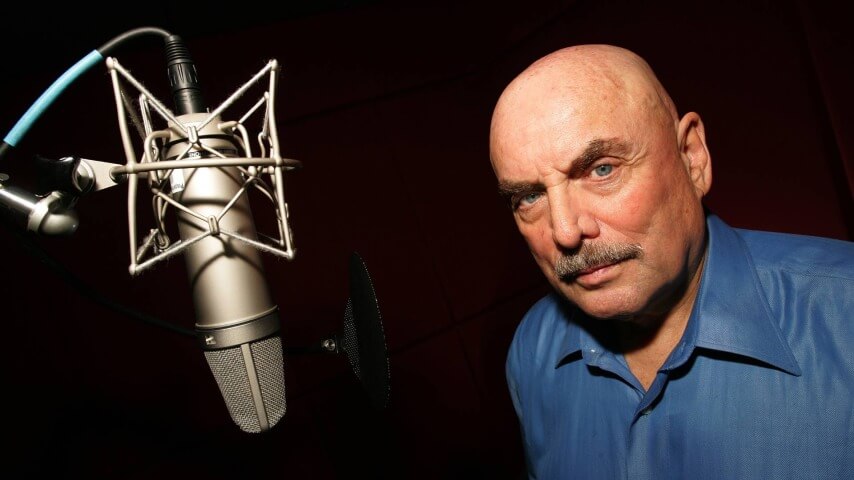
Breaking it down into three sections, Paul E.T.’s video speeds through the history and evolution of trailers. Starting with marketer Nils Granlund developing the idea to promote the Broadway show The Pleasure Seekers with rehearsal clips, Paul E.T. shows how trailers have been in flux ever since. In the ’40s, trailers began to feature narration, a helpful technique for introducing both the stars and the films’ premises. But it was the ’80s when the trailers found their voice through guys like LaFontaine. Unfortunately, like all trends, they grow stale over time.
Paul E.T. comes to two conclusions about trailer narration. First, that they were overused so much in the ’80s and ’90s that they became cliché, with comedians like Pablo Francisco making a name for themselves through impersonations of those gravely baritones. Second, trailers still use narration, albeit in different ways. As the trailer evolved into distinct components, with trailers for trailers becoming more common in the last decade, editors began relying more on other sounds to grab viewers’ attention. The decline of narration saw the rise in licensed music in trailers and staccato editing rhythms set to crucial exposition.
- Great Job, Internet!: Zohran Mamdani goes on Track Star, fields a bunch of softballs
- Great Job, Internet!: Mike Flanagan teams up with a true master of horror, Garth Marenghi
“What happened to narrated movie trailers?” is a fascinating and insightful look at how the trailer evolved into what we see today. We’re still in a world dominated by trailers, and god willing, we always will be.