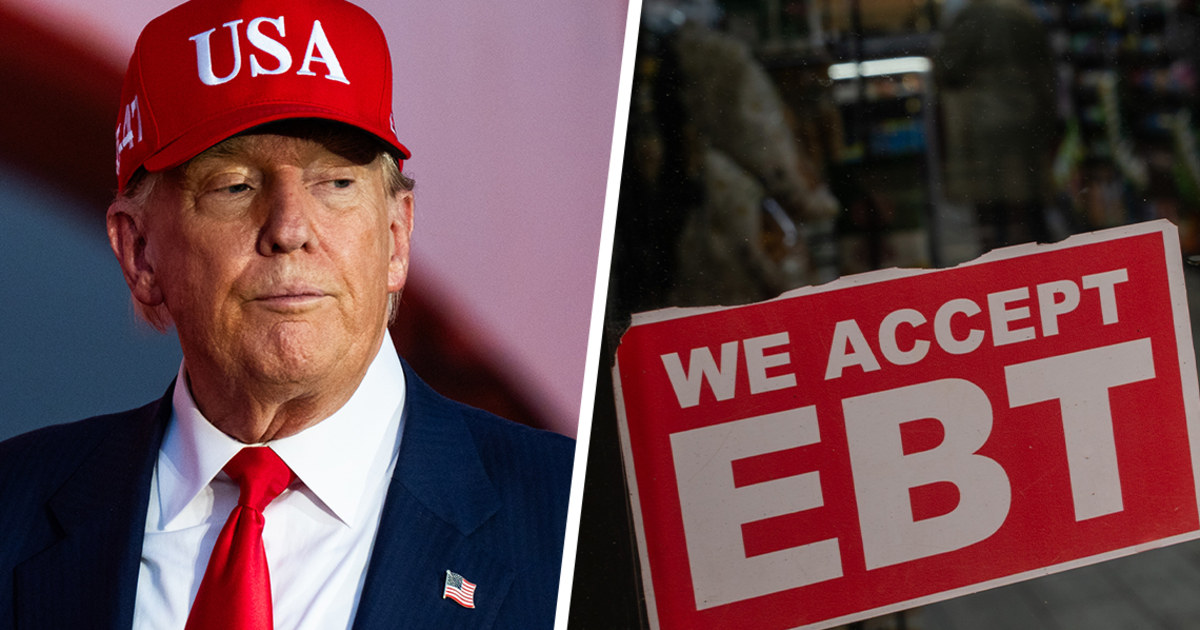
The Trump administration asked a judge Friday to pause his order that it fund the federal food stamp program immediately, despite the government shutdown, while it appeals that ruling.
Lawyers for the U.S. Department of Agriculture argue in Friday’s request for a stay that “there is no lawful basis for an order that directs USDA to somehow find $4 billion in the metaphorical couch cushions.”
Tens of millions of low-income Americans depend on the Supplemental Nutrition Assistance Program, or SNAP, to pay for groceries.
“People have gone without for too long,” U.S. District Judge John McConnell in Rhode Island said at a hearing Thursday. “Not making payments to them for even another day is simply unacceptable.”
McConnell strongly rebuked the administration for ignoring his original order to restart payments to recipients, noting they include 16 million children at risk of going hungry.
‘It’s likely that SNAP recipients are hungry as we sit here,’ U.S. District Judge John McConnell in Rhode Island said, accusing the Trump administration of causing ‘irreparable harm.’
“It’s likely that SNAP recipients are hungry as we sit here,” the judge said in his ruling from the bench, adding that the administration is causing “irreparable harm.”
McConnell said the Trump administration must fully fund SNAP benefits for the month of November “considering the finding of irreparable harm that would occur.”
The Department of Agriculture under President Donald Trump chose not to tap its contingency fund reserves beginning Oct. 1, when the ongoing government shutdown began, to pay for SNAP benefits. McConnell said the government could transfer $4 billion from the Child Nutritional Program to fully fund SNAP benefits without depleting its own money.
“USDA cannot now cry that it cannot get timely payments to beneficiaries,” said McConnell, who grew visibly irritated with the Justice Department lawyer representing the Trump administration in the SNAP case.
That lawyer, Tyler Becker, insisted that the administration had begun the process of providing payments to states to allocate benefits, saying, “We resolved all of the burdens that the government is responsible for.”