






Powell says US economy may be on ‘firmer trajectory than expected’
The U.S. labor market remained mired in its low-hiring, low-firing doldrums through September, though the economy overall “may be on a somewhat firmer trajectory than expected,” Federal Reserve Chair Jerome Powell said on Tuesday
Inflation rose again in September, revealing the persistence of rising prices as the job market shows signs of cooling and consumers head into the holiday season.
Consumer prices increased 3% from a year earlier, slightly up from 2.9% in August, according to the Labor Department’s Consumer Price Index, a measure of goods and services costs across the country.
On a monthly basis, costs increased 0.3% after rising 0.4% in August.
Price gains were led by increases for gasoline and energy, which rose 4.1% and 1.5% over the month, respectively. Shelter, airline fares, recreation, household furnishings and operations, and apparel prices all increased. The cost of motor vehicle insurance, used cars and trucks, and goods and services in the communications industry declined in September.
“Tariffs are still pushing up goods prices and the passthrough is broadening, with clothing, furniture and personal goods prices all posting strong gains,” Michael Pearce, deputy chief U.S. economist at Oxford Economics said in an Oct. 24 note.
He added, “Assuming tariffs do not rise much further from here, that one-off boost to goods prices from tariffs and the weaker dollar will begin to fade next year.”
Some economists said the numbers won’t be enough to keep the Federal Reserve from cutting interest rates next week.
What is the US core inflation rate?
Core prices, which exclude volatile food and energy costs, rose 0.2%, after rising 0.3% the month before. That moved the annual core inflation rate to 3%.
Airline fares increased 2.7%, after rising 5.9% in August. Apparel costs rose 0.7% and the index for personal care, recreation, and household furnishings and operations all rose 0.4%
The economic impact of the ongoing government shutdown has not yet been fully felt, according to Bankrate Financial Analyst Stephen Kates. At the Bureau of Labor Statistics, October data collection has been suspended during the lapse in funding.
“Federal layoffs or the absence of backpay would drag down spending and worsen labor conditions, especially in the local areas most affected,” Kates said in an Oct. 21 note. “The longer the shutdown continues, the larger our blind spot will be on current economic conditions.”
What is the Social Security COLA adjustment for 2026?
While the Labor department’s jobs report was delayed due to the ongoing shutdown, the Consumer Price Index received special attention as it was needed to calculate cost-of-living adjustment, or COLA, for Social Security.
The Social Security Administration announced a 2.8% adjustment in 2026, larger than the 2.5% increase beneficiaries have received in 2025.
Will the Fed cut rates in October?
Federal Reserve Chair Jerome Powell said earlier in the month there was “no risk-free” path for monetary policy as the labor market cools and inflation remains above the Fed’s 2% target.
While not likely a gamechanger, September’s rise in prices could complicate the central bank’s rate decision at the end of the month.
The Fed’s policymakers are weighing their dual mandates of keeping prices stable and maximizing employment after months of weaker-than-expected jobs reports. Uncertainty is compounded by the delayed release of the September jobs report, which has left officials with less data than usual to guide their decision.
Futures markets anticipate additional quarter-point rate cuts in both October and December, following the Fed’s quarter-point reduction in September.
“Despite the lack of labor market data due to the government shutdown, this lighter-than-expected CPI report should offer a confidence boost to a Federal Reserve that already appeared inclined toward additional rate cuts in October and December,” Kates said in a separate note Oct. 24. “The latest inflation data strengthens the case that continued easing is appropriate in light of the known conditions of the labor market.”
Is gas getting cheaper?
Gasoline prices rose 4.1% in September and are down 0.5% over the past year. Regular unleaded averaged $3.07 a gallon Oct. 23, down from $3.17 last month and $3.16 a year ago, according to AAA.
U.S. retail gas prices had been falling this year as OPEC+, a group of oil-producing countries, expanded output and U.S. crude oil production surged to record levels.
Are rent prices rising or declining?
Rent increased 0.2% in September after rising 0.3% in the previous month. That pushed down the annual increase from 3.6% to 3.4%.
Annual rent growth for single-family homes rose by 1.4% in August, its slowest rate in more than 15 years, according to Cotality, a property information, analytics and data firm.
Are food prices still going up?
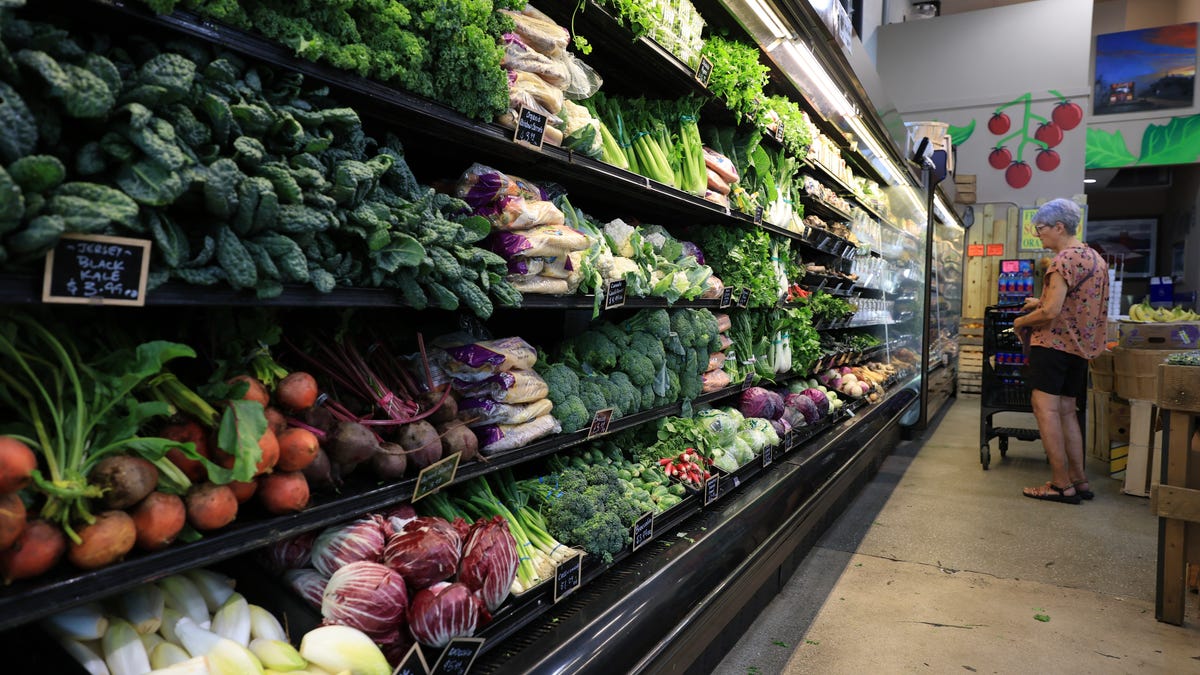
The food at home index, or grocery costs, increased 0.3%, following a 0.6% rise in August.
The meats, poultry, fish and eggs index rose 0.3% after climbing 1% the previous month. Beef prices specifically rose again after an increase in August. Earlier this month, President Donald Trump announced plans to import additional beef from Argentina amid record-high domestic prices, but the proposal has drawn criticism from some Congressional Republicans, with cattle producer groups arguing it would undercut U.S. ranchers.
Other staples got more expensive, with cereals and baker products and nonalcoholic beveragesprices both rising 0.7% in September.
Some got less expensive, with dairy product prices dropping 0.5% and cheese productsdeclining 0.7%.
Food away from home prices rose 0.1%.
This story was updated to add more information and to correct a typo.
Reach Rachel Barber at [email protected] and follow her on X @rachelbarber_