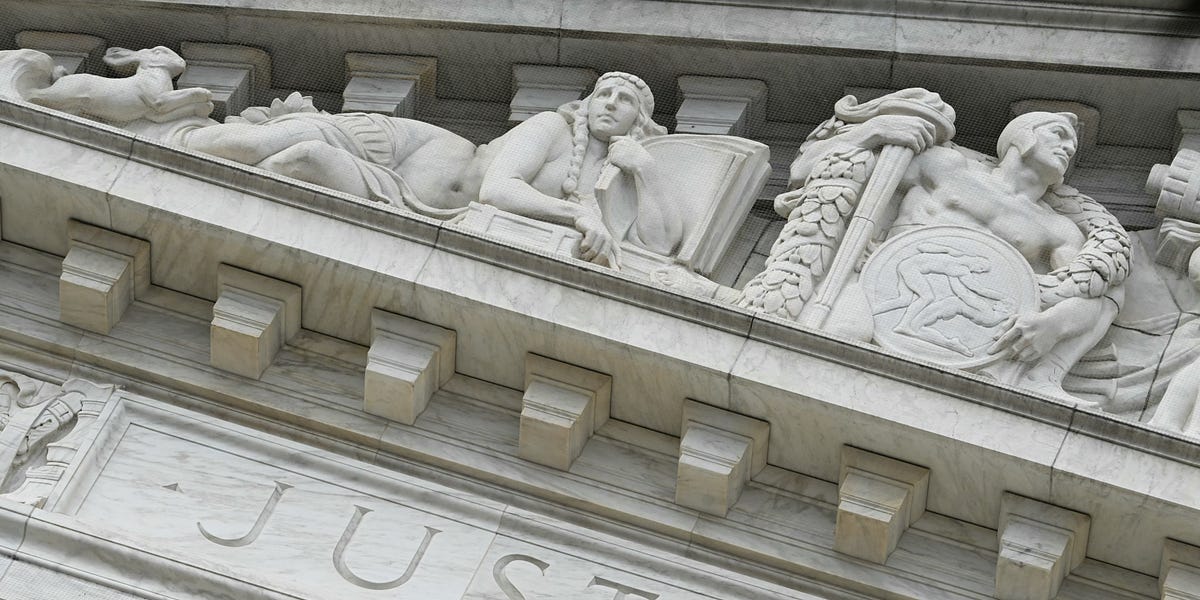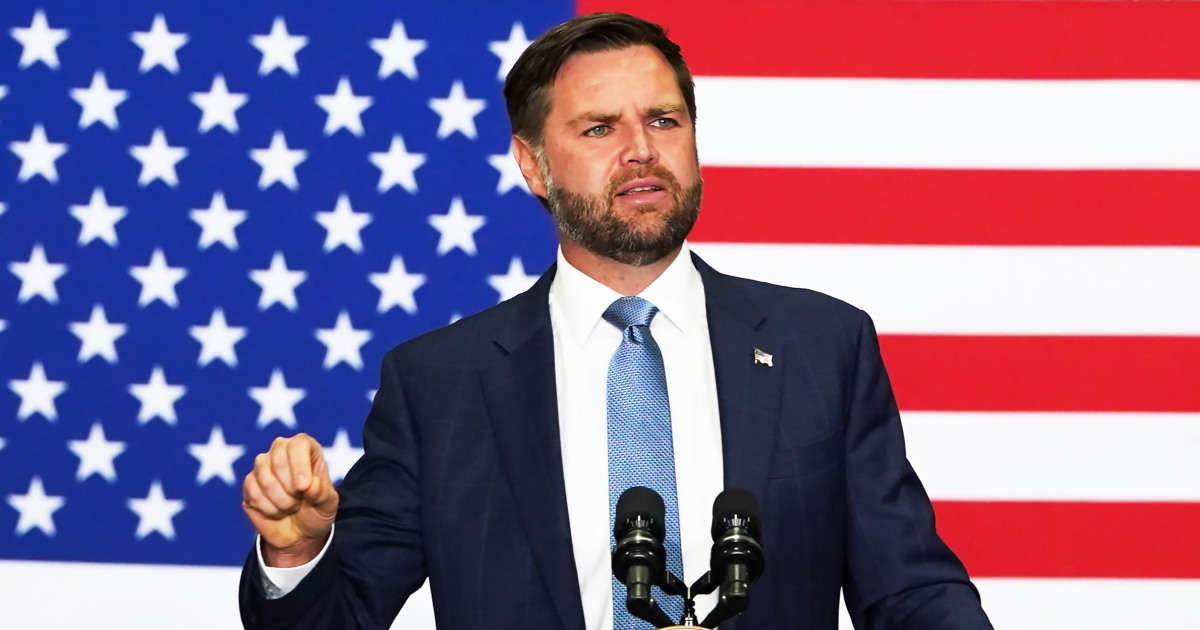
WASHINGTON — Supreme Court justices on Tuesday probed the legality of long-standing campaign finance restrictions challenged by Vice President JD Vance that limit how much national party committees can spend in coordination with individual candidates.
It is unclear exactly how the court will rule. A lawyer defending the limits argued that the case should be dismissed as moot because of Vance’s ongoing reluctance to reveal whether he will run for office in 2028.
The Supreme Court’s conservative majority has long been skeptical of campaign finance restrictions on free speech grounds, and Republicans have often brought challenges against them. Some of those justices expressed skepticism about the limits during Tuesday’s argument, while liberal justices defended them.
Hanging over the hearing was the legacy of the Supreme Court’s wave of rulings that have pared campaign finance restrictions over the years, including the 2010 Citizens United v. FEC decision, which paved the way for unlimited independent expenditures by outside groups known as super PACs.
Justice Brett Kavanaugh, one of the conservatives, suggested that striking down the coordinated spending restrictions might actually help restore the influence of national political parties at the expense of super PACs.
“I am concerned … that the combination of campaign finance laws and this court’s decisions over the years have together reduced the power of political parties as compared to outside groups with negative effects on our constitutional democracy,” he said.
But Justice Sonia Sotomayor, one of the liberal justices, who dissented in Citizens United, indicated there is still a need to restrict money in politics to avert corruption, saying the justices “make matters worse” by continually striking down restrictions enacted by Congress.
“The threat hasn’t diminished,” she said.
Conservative Justice Samuel Alito said Citizens United, in which he was in the majority, was “unfairly maligned.”
Roman Martinez, whom the court appointed to defend the restrictions when the Trump administration announced it would not do so, argued that the case is moot, meaning it should be dismissed and the current restrictions should remain in place.
But his argument seemed to get little traction, with justices appearing to accept that politicians often keep their cards close to their chests.
“Isn’t that what potential candidates always say?” Alito said of Vance’s remarks.
One of Martinez’s key arguments, outlined in court papers, is that Vance, who originally challenged the regulations when he was a Senate candidate, no longer has a stake in the case because he is not currently a candidate, nor has he announced any intention to be one in the future.
Martinez also argues that the National Republican Senatorial Committee, the National Republican Congressional Committee and former Rep. Steve Chabot, R-Ohio, all involved in the legal challenge, have no grounds to maintain the lawsuit, either.
Vance is walking a delicate line as a presumptive heir to President Donald Trump, who faces a constitutional bar to seeking a third term, while also serving as his vice president.
Asked in the recent NBC News interview under what scenario he would not run for president in 2028, Vance refused to take a firm position.
Vance has said before that “the politics will sort themselves out” about a future run if the Trump administration does a good job.
But he indicated it is too soon to make that call, saying “I don’t really think so” when he was asked whether the politics have, indeed, sorted themselves out.
“I try to not wake up and ever think, ‘What does this mean for my future?’ I always try to think, ‘How can I do a good job right now,’ right?” he added. “And that’s one of the reasons why I’ve tried to steer away from the 2028 conversation, because, yeah, like, it’s out there, obviously. It’s something that could happen. It’s something that might not happen. But I never want the focus on the future to come at the expense of this job.”
Martinez mentioned the NBC News interview during the oral argument, saying it helped bolster his argument.
Noel Francisco, the lawyer arguing for the Republican challengers, rejected the contention that Vance’s recent remarks mean the case is moot, saying that it is almost certain that Vance, as a young sitting vice president, will run again.
“This court doesn’t have to blind itself to the reality that’s obvious to everybody else,” Francisco told the justices.
A Vance spokeswoman did not respond to a request for comment on the case.
The restrictions at issue in the case were first enacted in 1971, but similar limits on rampant spending in elections have been undermined by subsequent court rulings.
Under the current law, a party can make unlimited independent expenditures in support of a candidate, but there are limits on how much it can spend in coordination with a candidate.
That can include hiring a venue or fundraising consultants or paying for a candidate’s travel.
The current limit varies based on the voting-age population in specific House or Senate elections; it can be as much as almost $4 million for Senate races and $127,000 for at-large House seats.
The parties in the case, including Vance and the GOP’s campaign committees supporting candidates for Congress, seek to eliminate those caps altogether.
A ruling in favor of Republicans would be likely to benefit their candidates more because Democrats have typically fared better in fundraising than the average Republican, meaning GOP candidates rely more on coordinated party expenditures.
As a result of the Trump administration’s change of position, the Federal Election Commission has sided with the challengers, saying it now agrees the restrictions violate the Constitution’s First Amendment.
In addition to appointing Martinez, the court also allowed the Democratic National Committee to intervene in the case in defense of the restrictions.