







New York
—
Most Americans agree: This economy stinks.
Practically every consumer sentiment survey and political poll points to that theme. People feel like their dollars aren’t stretching as far as before, and the cost of living is rising beyond their means.
There’s just one problem: That part is not true.
Most Americans are getting raises that outpace overall inflation. It’s not even a new trend. It’s been happening each month since June 2023.
So, why do people feel so lousy about their finances if they’re getting wealthier?
A number of key factors are at play, and most of them are messing with our minds more than our wallets.
-
Paycheck gains are shrinking as inflation heats up again.
-
The pandemic screwed with our collective psychology. Americans got a brief taste of financial security that very rapidly eroded during the inflation crisis.
-
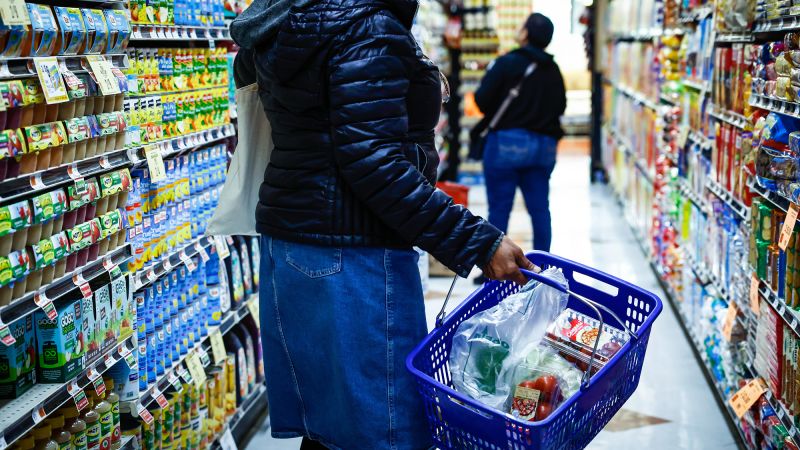
Prices on items you can’t avoid buying are growing much faster than overall inflation.
-
And wealthier Americans are skewing the data.
So this is the windchill economy: It feels worse than it actually is. For many Americans, it’s deeply unpleasant.
The inflation crisis took a substantial toll on Americans’ wallets. Between March 2021 and June 2023, inflation outpaced paycheck growth – at times by a historic margin.
But the trend started to reverse in mid-2023, and folks have been making out better since then. Their raises started to outpace price hikes, and paychecks have fattened across all income groups – not just top earners.
That gap started to widen substantially toward the end of former President Joe Biden’s term and reached its most recent peak in April 2025, when paychecks grew 4.1% over the course of the previous 12 months, while prices rose just 2.3% over the same period.
But the gap has shrunk considerably over the past several months. Inflation stood at 3% in September, while wage gains came in at 3.8%. Median income for working-age Americans slowed near decade-long lows this year when adjusting for inflation, JPMorgan reported.
Even though American workers are still ahead, they can see inflation creeping ever closer in the rearview mirror. The overall feeling that dollars aren’t stretching quite as far as they used to isn’t quite backed up in the data, but it’s starting to feel that way as prices are on the rise again.
During the pandemic, millions of Americans got their first taste of financial security. They weren’t spending on travel, gas, restaurants and a number of other items. Their savings were padded by what they weren’t spending – and Americans got an additional boost through historic government stimulus.
Pay exceeded inflation by record margins: In May 2020, average wages grew 7.5% over the previous 12 months, when inflation stood at just 0.1%. For a year, Americans gained substantial purchasing power. “Revenge spending” became a social media trend, and consumer confidence surged.
With ample savings and hefty raises, folks expected that they would make enough money to achieve the American Dream. But when the pandemic shifted into an inflation crisis, Americans discovered that the game had changed.
The housing market locked up, and the last bastions of cheap housing in America are gone: Boomers weren’t downsizing, starter homes were going for hundreds of thousands of dollars over asking price, million-dollar homes in middle-class towns became commonplace, and mortgage rates started to rise.
The wage-inflation calculus flipped, and during inflation’s peak in June 2022, prices rose 9.1% over the course of the previous 12 months – a four-decade high – wages grew only 4.8%.
The good vibes wore off – quickly. Robust spending growth that had carried into 2023 fell off a cliff and is now just treading water.
“People across the income spectrum were spending; they were living a pretty good life,” said Heather Long, chief economist at Navy Federal Credit Union. “And then you can see the straight decline for the bottom 80% for the vast majority of America.”
The financial security many Americans thought they could achieve feels even more distant than before they got their raises several years ago.
Even though pay gains are exceeding overall inflation, the particular prices that are gaining fastest are among the most painful for Americans to absorb.
Food, electricity, child care, home prices and rent have all outpaced wage gains over the course of the ’20s. Those items all have a common theme: They’re regular expenses that you can’t avoid.
Americans’ wages have gained 29% this decade. But grocery prices and child care both rose 30% over the past five years. Electricity is up 38%. Rent is up 30% and home prices have surged 55%, according to the Bureau of Labor Statistics.
You can decide not to buy a new TV or go on a trip. You can rein in your holiday spending – and many Americans have. But if the necessities are getting more expensive, that stings even more.
Just as prices are not all created equal, financial situations are wildly different, too. For wealthier Americans who have money in the booming stock market and equity in their home, they’ve gained significant financial security over the past few years. That’s not true for lower-income Americans, a rapidly growing share of whom are living paycheck to paycheck.
Bank of America’s deposit data illustrates that divide: Higher-income households’ paychecks grew 4% year-over-year in November — the highest since October 2021 and well above the 3% inflation rate. But middle-income households’ paychecks gained just 2.3% and lower-income households’ wages were up only 1.4% – half the pace of inflation.
Although Bank of America’s data hasn’t yet shown up in broader economic data, there’s ample evidence that lower-income Americans are struggling. Multiple prominent retailers that cater to middle-class and low-income Americans have said customers are visiting less and spending fewer dollars when they shop. That trend continued during the beginning of the holiday shopping season.
But Walmart and Costco, which appeal to middle-class Americans looking for value, are surging.
“This is the Costco economy,” said Long. “People need to save.”