





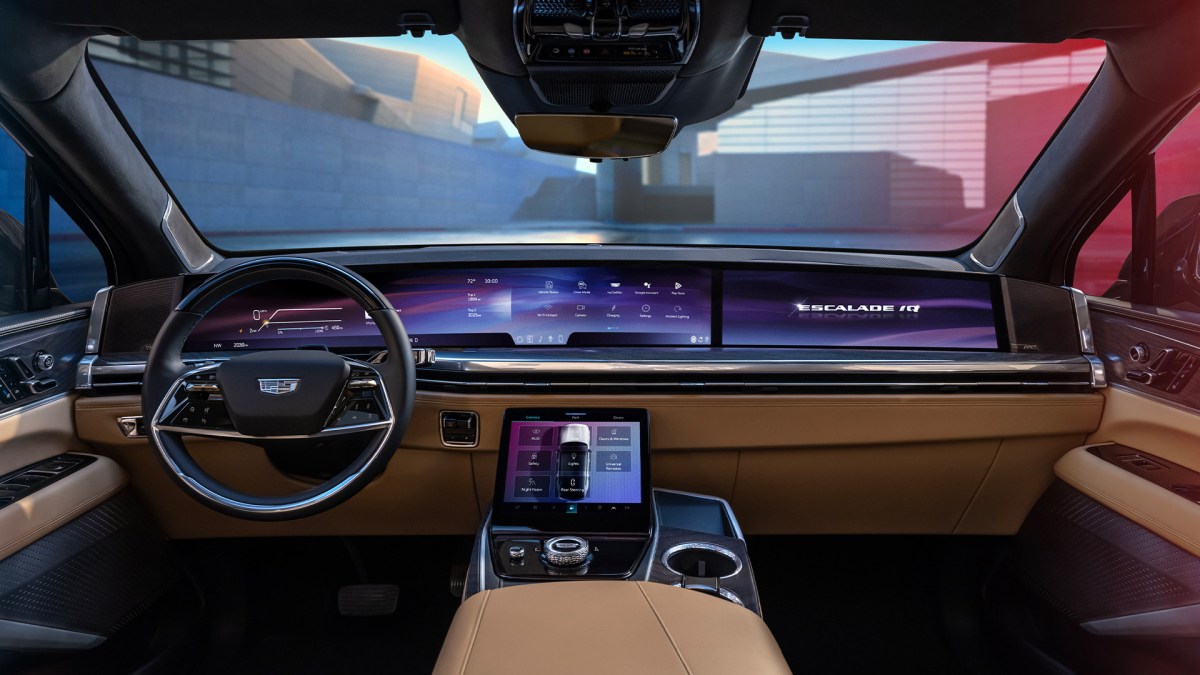
Big ol’ screens in cars affect every driver, whether directly or indirectly. Even if you’ve vowed to never buy a vehicle with an iPad on the dash, you’re sharing the road with folks who already did that. Blame them if you want, but it’s not entirely their fault that cars these days have done away with physical buttons in favor of distracting screens. It’s turned into a real mess, and it started with automakers giving customers something they didn’t even ask for.
My boss Kyle dove deep into the car-screen timeline for The Drive‘s latest YouTube video, starting with the 1986 Buick Riviera. That GM E-Body model was decades ahead of its time, and even though it was the first production car with a touchscreen, nobody really wanted it. Fast forward 30 years and they’re everywhere. What changed? Well, a lot.
First off, we didn’t have anything like an iPhone when the Riviera tried wowing middle-class families with the graphic control interface. That everyday-carry technology rapidly familiarized folks with touchscreens in a way they’d never experienced before. Then, as they became more widespread (re: produced in higher volume), they got cheaper. Car companies love the last word of that sentence even more than consumers, so after a few models like the second-gen Prius proved that people could live with screens in their everyday drivers, the mass exodus away from buttons began.
That’s where we find ourselves now, with screens stepping in for physical controls and clusters in every car category. Want a $300,000 super SUV? Screens are sold as luxury items. Need a $30,000 commuter with a warranty and not much else? Somehow, you still get a screen that’s about as nice as the CEO’s Bentley. That’s because digital displays save car companies money, above all else.
It’s also hard for a manufacturer to push pop-up ads to its customers without screens. Don’t even get me started on that.
If you want the full story, just watch the video embedded at the top of this blog.
Want to see more like this? Check out our YouTube channel! You might have thought it was dead, and it was… for a few years. We’re back now, telling stories such as these along with some nifty high-performance driving explainers.