Sign up for the Slatest to get the most insightful analysis, criticism, and advice out there, delivered to your inbox daily.
A largely forgotten chapter of the Watergate scandal connected two fixtures of American life: milk and political sleaze. The dairy industry sought a deal with President Richard Nixon to write a huge campaign check to his reelection campaign—in exchange for price supports that would artificially raise the cost of milk. But federal law strictly limited the amount it could donate. So Nixon’s henchmen devised a workaround: Dairy companies would funnel $2 million through various Republican Party committees, which could then transfer the cash to Nixon’s campaign. This scheme worked as intended. The companies cut their checks, and the president overruled his own secretary of agriculture to boost price supports for milk. When the quid pro quo spilled into view during the Watergate investigation, Congress enacted a new law that prohibited megadonors from laundering illicit contributions to candidates through political parties.
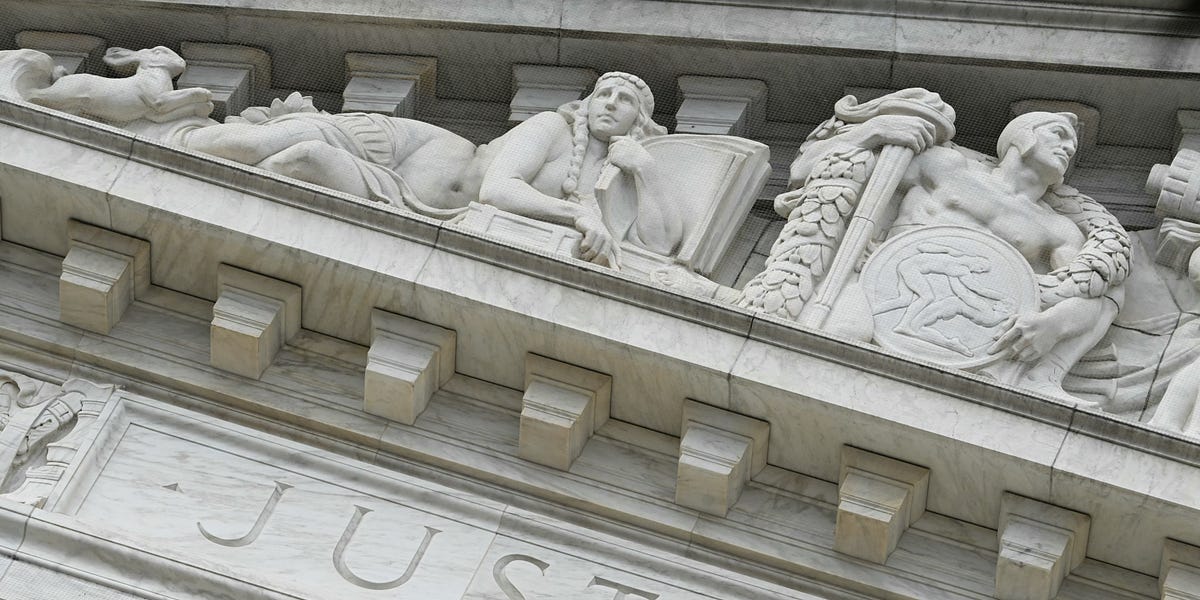
Now, more than half a century later, the Supreme Court is on the brink of striking down that restriction, handing plutocrats even more power to bribe candidates for political favors. The justices will hear arguments on Tuesday in NRSC v. FEC, a case cooked up by the GOP itself to demolish the barrier that Congress constructed to ensure that political parties do not serve as conduits for corruption. This modest safeguard strengthens American democracy without imposing a meaningful burden on anyone’s speech. Yet the Republican-appointed supermajority is almost certain to strike it down as an egregious violation of the First Amendment. Only in the upside-down world of Citizens United could any court pretend that political money-laundering is a form of protected expression.
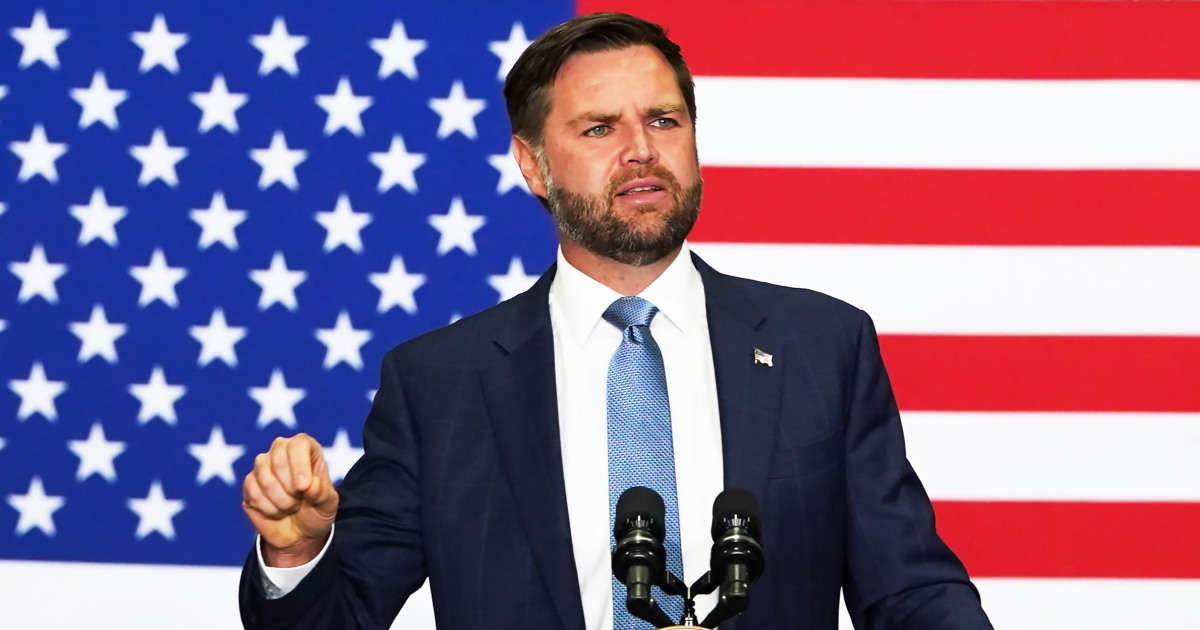
It is important at the outset to recognize that NRSC is not a real case in any sense of the term. It was engineered by Republican lawyers at the Trump-aligned law firm Jones Day—including Donald Trump’s former Solicitor General Noel Francisco—to help megadonors give even larger sums to GOP candidates. The plaintiffs are the senatorial and congressional committees of the Republican Party, along with Vice President J.D. Vance and former Rep. Steve Chabot. They challenge the 1974 statute limiting the amount of money that political parties can spend in coordination with candidates. Yet the Federal Election Commission, which Trump has hobbled by depriving it of a quorum, refuses to enforce this law. (The Justice Department also claims it is unconstitutional and declined to defend it; the Democratic Party, represented by Marc Elias, intervened to argue in its favor.) Meanwhile, neither Vance nor Chabot is currently running for election.
Why, exactly, do these plaintiffs have standing to challenge a law that will not harm them whatsoever? Unclear. What’s all but certain, however, is that the Supreme Court will glide past these problems, embracing yet another fake case in pursuit of a broader ideological agenda.
That agenda, of course, involves shredding what remains of campaign finance reform to let a small number of wealthy (and disproportionately conservative) people overpower the voices of ordinary Americans. It did so in 2010’s Citizens United, a needlessly broad decision that permitted corporations and the ultrawealthy to spend unlimited funds purchasing elections. It did so again in 2014’s McCutcheon v. FEC, which struck down the aggregate limit that individuals could give cumulatively to candidates and party committees. That decision paved the way for our current age of joint fundraising committees, or JFCs, a hydra that combines a candidate’s campaign with multiple party committees. Today, thanks to McCutcheon, a funder can write a nearly $1 million check to a candidate’s JFC, a SCOTUS-enabled circumvention that swamps small donors’ contributions. Although the money is theoretically divided up between committees, they can transfer it between each other, pooling it to the candidate’s maximum benefit.
And yet, there are a few remaining campaign finance reforms that still have real teeth. One is the contribution cap to candidates, committees, and parties. In 2026, Americans can give $3,500 directly to candidates, $5,000 to political action committees, $10,000 to state and local parties, and $44,300 to national parties. (That figure is higher if the money is for conventions, recounts, or headquarters construction.) These limits reflect Congress’ judgment that when individuals can hand over massive checks to candidates or parties, the risk of quid pro quo corruption is intolerably high. So far, the Supreme Court has tolerated this restriction.
But NRSC seeks to blow a hole in it. It takes aim at a rule that regulates how much money parties can spend in coordination with a candidate. That number, periodically adjusted for inflation, is $127,200 to $3,946,100 for Senate campaigns and $63,600 for most House races. (It is higher for larger states and districts.) These ceilings ensure that megadonors do not evade the contribution caps by funneling seven-figure checks to candidates through parties. Without them, parties could accept and spend eye-popping sums hand-in-glove with their candidates, operating as intermediaries between donors and politicians. (In theory, donors are not supposed to “earmark” contributions to the parties for specific candidates, but as the ethics watchdog CREW has shown, this supposed guardrail is meaningless in practice.)
The coordination rule thus protects our democracy from schemes like Nixon’s, in which moneyed interests bribe federal officials through political parties. This threat is not some relic of the Watergate era, either; it was actually key to the Jack Abramoff lobbying scandal of the early 2000s. The stakes are immense: Right now, you can give a congressional candidate just $3,500 per election. If the rule is invalidated, you can effectively give them almost $1 million by funneling it through the parties. Just give the money to the candidate’s JFC, which can transfer it to the party for coordinated electioneering. Need something in return? It’s hard to buy a favor in Congress for $3,500. But $1 million will often win a politician’s gratitude and fealty.
Of course, the Supreme Court knows about these risks. And it once cared about them: In 2001, the justices upheld the coordination rule, albeit by a 5–4 vote with the conservatives dissenting. Republicans have been gunning for it ever since, and their quest grew more urgent as the party came to rely heavily on megadonors in the Trump era. After Citizens United, McCutcheon, and other recent blows to campaign finance reforms, the GOP decided it was time to take aim at the coordination rule, a move the Trump administration heartily supports. (The plaintiffs argue that they have standing because a future administration might punish them for violating the rule today, which will probably be enough for the conservative justices.) The Supreme Court’s decision will likely track the reasoning of Republican appointees on the lower court; these judges lobbied SCOTUS to overturn precedent and kill the rule—ostensibly to vindicate the First Amendment rights of donors, parties, and candidates to collude with impunity in the buying of elections.
Americans want none of this. As the Brennan Center noted in an amicus brief defending the coordination rule, citizens overwhelmingly believe that large contributions corrupt our government, making politicians less responsive to regular people. Do the Supreme Court’s conservatives fail to see this, or are they willfully facilitating a plutocracy by judicial fiat? Daniel I. Weiner, director of the Brennan Center’s Elections and Government Program, told me that SCOTUS treats campaign finance cases like this one as “logic games” that are “utterly divorced” from reality. “Most of the judges issuing these opinions have not really participated in any meaningful sense as candidates or campaign operatives,” Weiner noted. “They haven’t run a campaign or served in elective office. The dismissiveness that they are demonstrating for these rules is at odds with the preferences of 80 percent of the American public.”
It has been more than 50 years since Congress tried to guard against the exploitation of political parties as a back door for big-money quid pro quos. In the decades since, episodes like the Abramoff scandal have vindicated the wisdom of that decision. Now six unelected judges are poised, yet again, to strip our democracy of another protection against the pernicious distortions of concentrated wealth.