






President Donald Trump’s administration is weighing plans to carry out strikes on Venezuelan military targets in the country and seize the South American nation’s oil fields, according to a Tuesday report from The New York Times.
“President Trump has been clear in his message to [Venezuelan President Nicolas] Maduro: stop sending drugs and criminals to our country. The President has made clear that he will continue to strike narcoterrorists trafficking illicit narcotics – anything else is speculation and should be treated as such,” White House deputy press secretary Anna Kelly told Newsweek.
Newsweek reached out to the State Department for comment.
Why It Matters
Officials in Washington and defense analysts say the United States has identified key targets inside Venezuela that are tied to drug trafficking operations allegedly controlled by Maduro’s regime. Meanwhile, Trump has severely escalated his administration’s campaign against drug cartels, which he has designated as unlawful combatants.
According to U.S. officials previously cited in The Wall Street Journal and the Miami Herald, the Trump administration is considering airstrikes on ports, airfields, and military facilities that sit “at the nexus of the drug gangs.”
What To Know
Officials within the Trump administration have prepared a series of military plans aimed at Venezuela, according to multiple unnamed U.S. officials briefed by The New York Times. Chief among the proposed objectives are targeting Venezuelan military units protecting Maduro and seeking control of oil fields central to the country’s ailing economy. Although Trump has not made a final decision, he has ordered the Justice Department to draft updated legal justifications for such actions, potentially circumventing the need for congressional authorization or a formal declaration of war.
The report from the Times cited unnamed U.S. officials and said that Trump has yet to make a final decision. However, the president has been carrying out military strikes on boats off the coast of Venezuela, which the administration says are working to transport drugs. Those attacks have increasingly drawn bipartisan concern, with some questioning the legality of such actions.
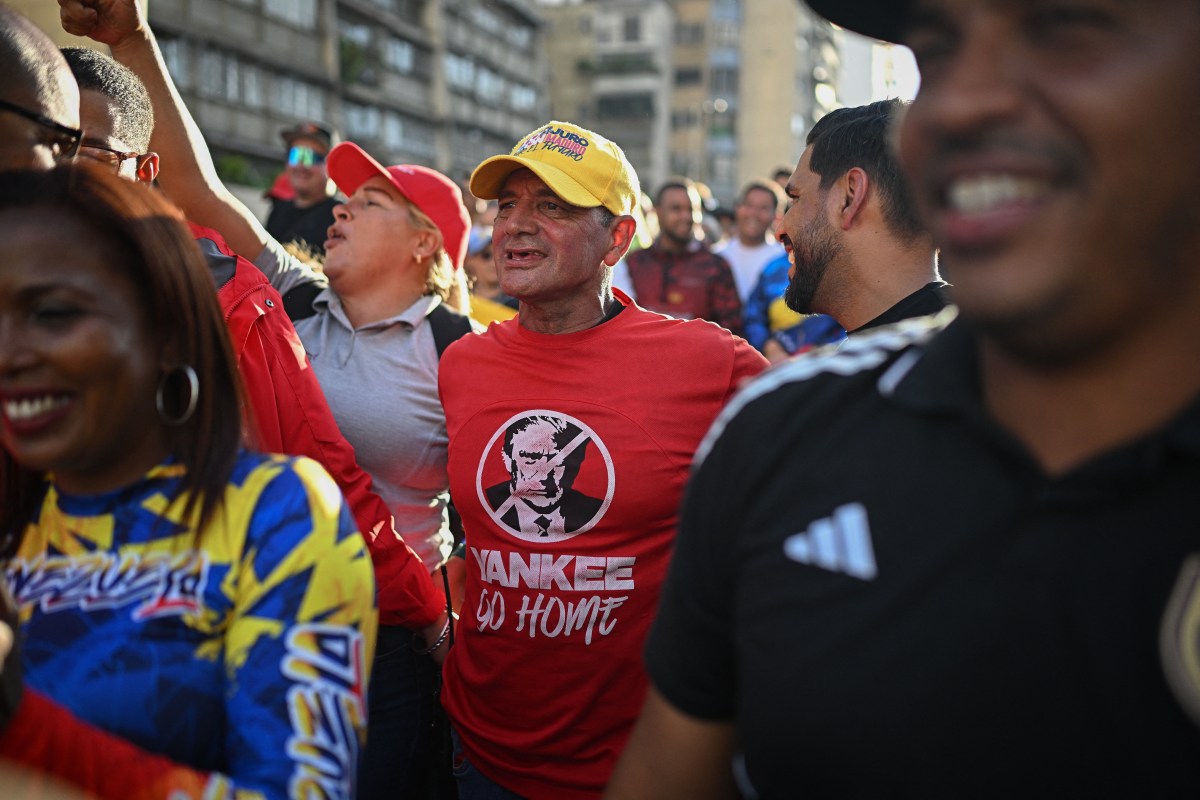
Venezuela’s vast oil reserves have prompted specific attention from the administration. Trump reportedly rejected Maduro’s offer to grant oil concessions to American companies, while U.S. energy giant Chevron awaited further U.S. policy guidance concerning its operations in Venezuela. The administration’s critics, including Venezuelan officials and opposition figures, have argued that the U.S. actions serve as a pretext for seizing the nation’s energy assets.
Senior aides, notably Secretary of State Marco Rubio and Deputy Chief of Staff Stephen Miller, have championed the idea that Maduro’s removal is essential for both U.S. interests and regional stability. At the same time, legal experts within the administration have struggled to align potential actions with U.S. law, particularly concerning the prohibition on assassinating foreign leaders and the lack of explicit congressional backing.
Venezuela’s Response to Trump
In late October, Maduro accused Trump of warmongering after he deployed the U.S. Navy’s largest aircraft carrier, USS Gerald R. Ford, to the Caribbean. Maduro told his country’s state media that the U.S. was “inventing a new eternal war” as the Trump administration ramps up an operation to target alleged drug smuggling boats.
The U.S. has already deployed eight Navy ships to the region, along with a nuclear-powered submarine and approximately 6,000 sailors and marines, according to officials.
Since returning to the White House, Trump has adopted a tougher stance toward Maduro and his government. Washington accuses the Venezuelan regime of leading the Cartel de los Soles (Cartel of the Suns), a drug-trafficking network allegedly embedded within the country’s military.
Although no final decision on airstrikes has been announced, Trump has publicly stated that military options remain “on the table.”
“Venezuela is feeling the heat,” Trump recently told reporters, declining to comment on whether the CIA has been authorized to carry out covert operations.
Trump denied last Friday that he was considering military strikes inside Venezuela, amid reports that the use of force inside the country was imminent. When asked, he simply said “No,” without elaborating.
Russian Foreign Ministry spokeswoman Maria Zakharova on Sunday said Moscow “resolutely condemns the use of excessive military force” by the U.S. in the Caribbean. She emphasized that Russia fully supports the Venezuelan government in its efforts to safeguard national sovereignty and maintain the region as a “zone of peace.”
Russia provides military aid to Venezuela and is an ally of the Maduro government.
What People Are Saying
Representative Marjorie Taylor Greene, a Georgia Republican, said on The View on Tuesday when asked about recent military strikes on boats: “I don’t believe in regime change. I don’t believe that we should be engaging in war period…I don’t think that we need to go out and attack other countries.”
Secretary of Defense Pete Hegseth wrote on X last week: “The Western Hemisphere is no longer a safe haven for narco-terrorists bringing drugs to our shores to poison Americans. The Department of War will continue to hunt them down and eliminate them wherever they operate.”
Jorge Rodríguez, president of Venezuela’s National Assembly, said during the Parliamentary Meeting of the Greater Caribbean in Defense of Peace: “This is not just a threat to Venezuela—it is a threat to the entire Caribbean and the Americas. An action is being promoted that makes it seem natural to threaten the sovereignty and internal affairs of other nations.”
U.S. Representative María Elvira Salazar, a Florida Republican, previously told Newsweek: “The Trump administration is doing exactly what it needs to do—remove from power an illegitimate president, someone who stole last year’s election after promising to abide by the Barbados Accord.”
What Happens Next
How the administration plans to proceed remains to be seen, but given the current posture, further strikes on boats are expected to continue.
Venezuela’s military maintains a sophisticated air defense network, including Russian-made S-300 systems and some 5,000 Igla-S man-portable missiles. Experts warn that even precision strikes could risk escalation if Venezuela’s forces retaliate or if Russian aid increases.
Update 11/4/25, 3:36 p.m. ET: This article was updated with comment from White House deputy press secretary Anna Kelly and additional information.