




Experts explain how FOMO, social proof and performance culture have turned ordinary snacks into global must-queue experiences.
Thomas A P van Leeuwen has a riveting view from his Amsterdam flat. His street, Keizersgracht, is lined with imposing 17th-Century canal houses – but what the academic and author sees each day is distinctly modern. Day after day, tourists form long queues on the bridge, holding up €5.50 (£4.80) cones of fries against the gabled backdrop for TikTok or Instagram posts.
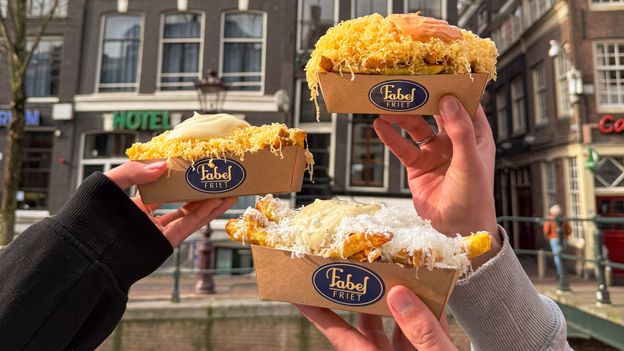
FabelFriet is the place to get fries in Amsterdam. The brand opened its first shop in 2020 and blew up on TikTok in 2023; ever since, its original location in De Negen Straatjes (Nine Streets) neighbourhood has drawn constant lines. Signs and staff manage the crowds, sending chip-seekers down the bridge and along the pavement. A few metres away, Korean sandwich shop Chun has similar queues, while the prettily packaged cookies at Van Stapele Koekmakerij have become another viral Amsterdam pilgrimage.
Amsterdam is far from the only city where people are salivating over food. In New York’s West Village, L’Industrie draws hour-long queues for a slice of pizza. Getting a salt beef bagel at London institution Beigel Bake is a test in loyalty and patience, while Japan’s I’m Donut? craze has gone global, with a New York outpost generating constant lines. Meanwhile Italy’s All’antico Vinaio has tested its fame in the UK and the US, with patrons lining up for its freshly baked schiacciata (Tuscan flatbread) sandwiches.
Across the world, travellers are now willing to wait an hour or more for trendy takes on everyday staples. Saturday Night Live even did a parody on the phenomenon. But psychologists say that these lines aren’t really about the food at all; they reveal how social media, status and performance are reshaping modern travel.